

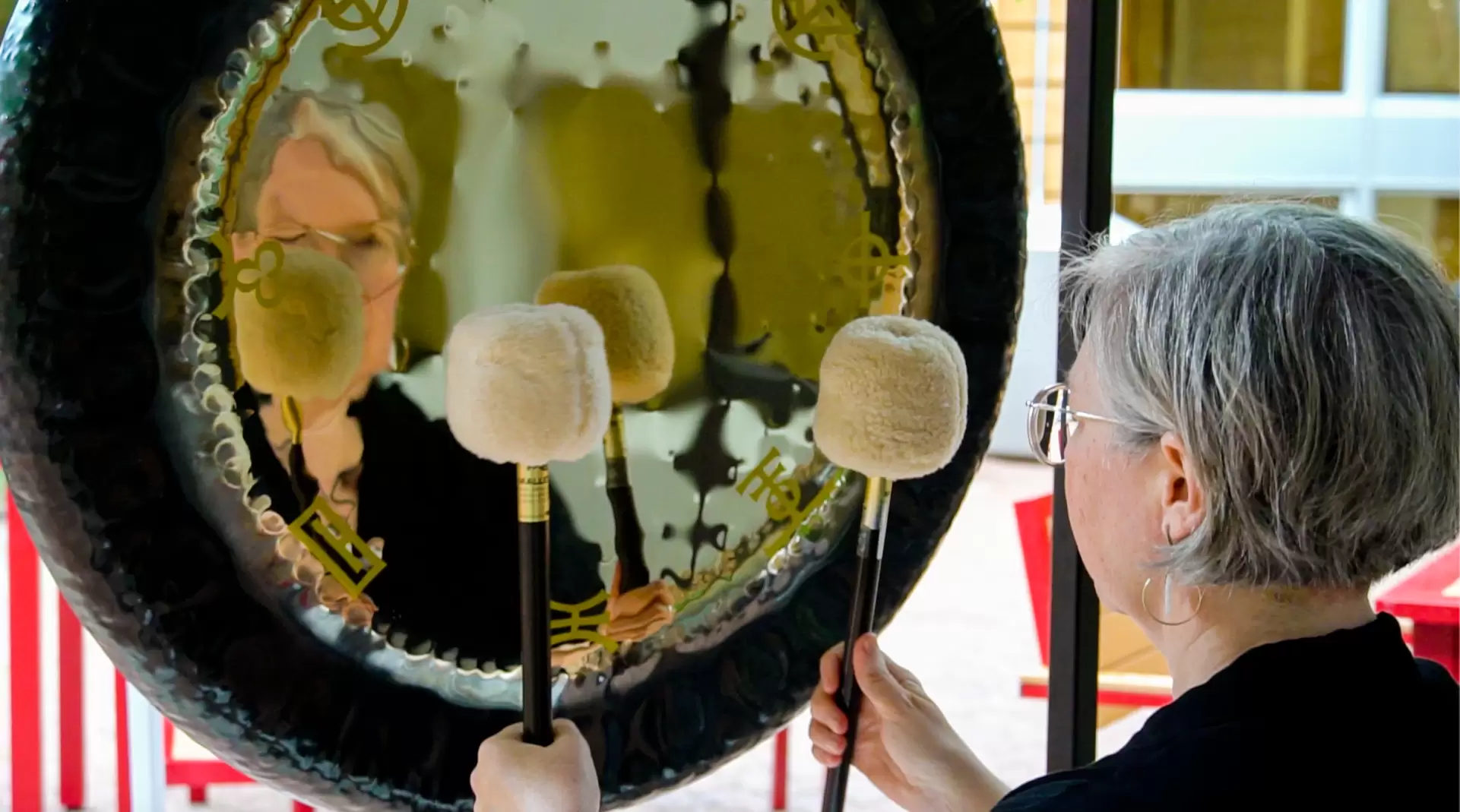

Led by the University of Regina and including 11 universities across the Prairie region, the Balance and Change in the 21st Century summit will bring together senior leaders across public and private sectors to discuss an emerging and confirming vision of Canada that addresses our need for economic and technological development as well as a culture of dignity, tolerance and meaning. It will be much more than just sharing information. Our intent is to use this gathering of senior leaders as a catalyst for a movement to foster and promote a culture of balance in the future. Dr. Maioni’s lecture will raise awareness of the fundamental importance of the Humanities in creating a society that is balanced, empathetic and tolerant.
Humanities in Business
Scott McGillivray is Chief Strategy Officer at iQmetrix, responsible for supporting strategic development and execution, employee development and corporate culture. iQmetrix is a software development company started in Saskatchewan, now the North American leader in POS software for mobile retailers.
HRI: Did you study humanities? If so, what humanities were included in your field of study?
SM: My major wasn’t in the humanities. My undergrad degree is in business administration. However, for my electives, I loaded up on psych classes, sociology, anthropology. Where I had a choice, I was really more in the social sciences. The fields of marketing and organizational behaviour are off-shoots of the social sciences: there are strong connections there.
HRI: And you see business and humanities as connected?
SM: Yes. Absolutely! When I was in my early 30s, I got my first executive role, and after a while I realized that the issues I was dealing with were more related to people than dealing with spread sheets, financial statements, or poring over statistical models on market research. I was dealing with Person A and Person B who wanted the same job, or were facing a backlash from our customer base, or were in difficult negotiations with a partner. All those things are issues related to the humanities. I felt I was drawing more on my electives than I was on my actual core classes from my business degree.
HRI: That makes me wonder if it would be beneficial for a business degree to have more humanities.
SM: You know, I actually tried to convince my own children to get undergrad degrees in the social sciences and then work for a couple of years, then go get an MBA. I didn’t want them to get a business degree and then an MBA, because what they’ll find is that they’re six miles deep, but they won’t have the breadth of knowledge that they’ll need as they progress through their career. I don’t know that you can possibly get away from the current structure of the business program, but I would advise people to go right to a BA. Get your BA Honours, or BA Advanced degree, and then face the challenges of writing a thesis about a topic that you’re deeply interested in. From there, you’re going to find a job in the marketplace. You’re going to learn a lot more about what you’re interested in and from there you can get a lot more focus on what you do with your Master’s degree. There are so many different options today on how to complete a Master’s: you don’t have to attend full-time. You can work and take classes.
What I would like to see, and something that we’re tackling in the near future at iQ is a leadership development program that is two-level. We currently have a leadership development program, but it’s like a level one. Level two will actually be based around the humanities. We’ll study the classics, philosophy, something like sociology. We’re going down that path because we strongly believe that the success of an organization is dependent upon the health of the culture. Health of the culture is dependent upon the capacity of the people who are members of the team to collaborate, communicate effectively, problem-solve: in essence, work as a team. To do that, you really have to understand the human make-up. We have all this technical knowledge and competence, but it really boils down to, can members of a team function well together? If they can, amazing things happen.
HRI: I hear you saying that just to broaden everyone’s understanding of being human and understanding humanity is going to help.
SM: Yes. I have a strong belief that humanities matter for business. There’s actually been quite a trend over the past five years in popular media related to business to focus on culture. It used to be defined as organizational behaviour, but the focus of senior leadership on culture has become much more intense. Very successful companies have always paid attention to their culture. IBM, HP or the Royal Bank, those companies have always had a very strong sense of their culture. And they’ve also been very profitable organizations.
HRI: Do you see humanities as relevant in your current business?
SM: Oh, yeah! In our executive team meetings, 20% of our time is spent on topics related to finance, 40% on products and markets and 40% on people and culture. What we’re doing as a business is a function of what our people are doing, and our customers and our partners. At the end of the day, we’re in the people business. Unless we can function as a team, we’re not going to succeed. The counter-argument may be that we just write code and sell software. But, who do we sell software to? Our customers are businesses that are made up of people who make choices about what software they want to have within their companies. How we build software is directly related to how we structure our teams and how they operate.
Our priority is finding the right people, supporting them and creating an environment where they can be successful, and then giving them latitude to function so that they can operate in the areas where their strengths are, but also ensuring we get the job done. We’ve had teams where they haven’t delivered. We were faced with a major decision last March. We lost a contract with a major carrier in the US. There were 50 people on the team. The cash flow related to that project was gone. Do you lay off 50 people? Or do you say, those people made a commitment to the company, this project has failed for a number of reasons, some our own fault, others beyond our control. We could have done things better, we made some bad choices. But the choice in the end was, because individuals made a commitment to the company, as much as possible, there should be a reciprocated commitment, which is a function of our values. Which resulted in deep loyalty from employees. Financially we took a pounding for quite a while: the beginning of 2012 wasn’t the greatest, but at the end of 2012, we came out profitable, we made money and the company is stable and strong and in good shape and with strong prospects. I don’t think we would have made that choice if we were solely focussed on finances. I think because there’s a strong bent within the executive and throughout the company on people, which is a function of understanding the humanities, that’s why I believe that choice was made, as opposed to, if it was straight numbers, we would have cut the 50 people in a heartbeat.
HRI: This company has had to go through some growing pains, from just a few people to what you are now, and with your experience here and elsewhere, what would be your advice for someone starting a small business?
SM: Be clear on the type of culture you want, and the kind of people you want to work with. You’ve got to build the right team. And you’ve got to do it in the right way. Markets and products and all those sorts of things matter, but it’s finding the right people, having a commitment to those people, enabling, or creating an environment where those people can really contribute. If I look at the history of iQ, we didn’t know it at the time, but I have a better understanding of it now, that the people who are successful at iQ are very resilient people. They are able to grow through change. So, find those people who are resilient; those who are flexible. When we first started, there was nothing for customers, but today we’re an almost $100 million company. What people have done in this company is truly remarkable.
HRI: Is there anything else you would like to talk about?
SM: One thing I would like to make clear: business doesn’t exist unless it makes a profit. A lot of people make the mistake, coming into iQ, thinking, “Oh, it’s just fun.” Actually, no. You are going to work. And there are days when it’s a lot harder than you would like it to be. There has to be a balance between the needs of an organization, the practicalities and the finances, and the individuals and teams. When a business figures out how to balance those things with proper focus on their customers and partners, they’re primed for success. And I believe that the humanities plays an equally important role as finances, or being able to write code. They have to coexist for a company like ours.
The Power of the Humanities

Dr. Richard Kleer
Dr. Richard Kleer, Dean of Arts at the University of Regina
It can turn minds on and open them to fascinating questions: it makes them curious about the world.
What the humanities has to offer to society in general is both an awareness of the complexity of the world, and a delight in exploring it. We can begin to understand that we’re never going to be able to explain everything, and to deal with doubt and uncertainty. I feel like I have two sides to my personality (as I think many others do, as well): one in which I like to have things nice and tidily under control. We each do things to nurture this part of ourselves. I like to program. When I program, everything is nice and orderly and logical and I can get things just the way I want them to be. But I also am a humanities scholar, an historian. That’s the disorder of the world: there is no way to completely sort out why things happen, where they came from and what it all means. I think I need that sense of control and tidiness in order to deal with the disorder of being human and exploring what it means to be human.
Besides being an historian, I am an economist. Economists are people who like the world to be very orderly and they can pull it apart and know exactly what is happening and has happened. They have created a set of techniques to be able to do that. But, in the process, they have set aside a whole array of questions that are difficult to answer. What the humanities can do, should do, and is beginning to do in my discipline, is make people aware that you can’t answer everything, that you have to develop that tolerance for uncertainty and doubt. One question economists like to answer is “Why did they do that?” There is a sub-field in economics called Behavioural Economics. It has the capacity, when done well, to alert economists to the fact that the human mind is a wonderfully complex thing: that we constantly deceive ourselves, and that we ourselves don’t know what it is we’re doing or why we’re doing it. When, as an economist, you start trying to analyze social situations beginning with the assumption that everyone knows what they want, you might get a very different outcome from that kind of analysis than you would from one that comes with the assumption that people are messy and don’t always know what they want or why they want it.
We have two tools at our disposal to help inform students and society in general about the humanities. The first of these tools is the students themselves. We need to expose them to humanities and the interest and exploration they can engender. We need to have classes that go beyond the acquisition of skills required for a profession, or the steps needed to get to graduate school. To be exposed to the humanities is to begin to explore what it means to be human, to begin to be curious about questions perhaps never before asked. Students then bring with them, wherever they go, a curiosity about the world, an interest in things beyond a job.
The second tool at our disposal is our teachers. These are people that spend significant time with children who are learning. We have all known a teacher or teachers who pass on a passion, not necessarily for doing one thing, but for thinking, for learning and for exploring. These teachers make it natural for students to want to go on to university, and the opportunity it presents to think and explore further. So, we need our teachers to be exposed to humanities and to have that light of inquiry, curiosity and exploration turned on for them.
However it happens, that spark of wanting to learn more about the world, and the pleasure of thinking for its own sake, is what we have to offer.
The Humanities in Today’s World
Dr. James McNinch, Dean of Education at the University of Regina
The humanities help us to conceptualize the world from many larger and diverse perspectives beyond our own immediate and often very parochial experiences. The arts and humanities are about understanding ourselves as imaginative, creative, artistic beings. Such
creativity and imagination is found in all disciplines. When we understand this, we see that the binary between professional faculties and other faculties is a false one. Professional schools are built on a foundation of a broader understanding of what a liberal arts and humanities education is about. People heading in the direction of a professional degree don’t see themselves necessarily as engaging in the humanities, until they come to university. Of 120 credits of a typical 4 year professional degree, 60 credits (50% ) are in other faculties that offer courses in the arts, fine arts, sciences,and social sciences. In addition, many professions assume that a four year undergraduate liberal arts degree is a necessary preparation for professional studies. Such fields have included Law, but this is now becoming the new norm in fields such as Education and Police and Justice Studies.
Education, broadly, is about exploring what it means to be human and then applying that understanding to a particular endeavour. The humanities are the unseen underpinnings that professionals bring to their field of expertise. The humanities help us to understand who we think we are. That understanding, of course, is always in flux.
I am often asked, “What is the utility of the arts and humanities?” It’s hard to
turn that question away from the value or a value-added argument implicit in that question. Study of the humanities help make for better human beings, better societies,and hopefully a better world.
We need to help others recognize and re-imagine the humanities. The history of the Humanities from the Greeks onward is about the study of logic and rhetoric for the preparation for men to assume positions of power and privilege. Today, however, the creative and imaginative aspects of the Humanities need to be emphasized. Elementary schools and high schools are full of the study of the humanities, for instance, but it’s rarely labelled as such. Everyone sees the importance of being informed by an understanding of the world in which we live, and our relationships with self and others; we need to call this what it is: the arts and humanities.
Today, for example, social media continues to amply demonstrate that the humanities and our needs to connect and care and explore what it means to be human are alive and well.
As humans we continually reinvent ways to tell stories about who we think we are. Some of these narratives are embedded in particular disciplines, reified in Universities, that too often seem to be self-serving rather than accessible to the population at large. I believe, however, that what we call the “arts and humanities” will liberate all of us from the elitism often inherent in discipline-based “higher” (as if better) education.
I find it exciting to see new students come to university with a vague or narrow or understandably naive idea of what they should be studying, and then, after a couple of semesters, to discover a much broader range of subjects, ideas, and fields of study through their introductory classes. All sorts of new ways of knowing open up. Not everyone sticks to the goals they had or that their parents had of them like becoming a teacher or a nurse, for examples. I entered university thinking I should become an economist and drive an expensive imported sports car and ended up doing a double major in history and English. I was captivated as an undergraduate by the human and intellectual scope of these disciplines. My own induction into teaching and education happened much later, but was always animated by my immersion in the humanities. My grandson is entering university next year with the idea that he wants to become a member of the RCMP. There is nothing wrong with that, but I also hope that his own immersion in a liberal arts education, which is the foundation of the Justice and Police Studies curriculum, will open up many other possibilities to him about what it means to be a human being in this world.
HRI Awards Competition
Humanities Research Institute, Spring Awards Competition
Special Call and Regular Call for submissions
Deadline: April 8, 2013
An awards competition will be held in the following categories:
Regular Call:
Research Awards
Assistance Awards for Visiting Speakers at Conferences and/or Symposia
Visiting Research Fellowships
Special Call:
In addition to the regular call for submissions to the research awards, a special call is announced for interdisciplinary research conducted by individuals or teams. The emphasis of proposed research should be on research that reflects a humanities context and that draws from other disciplines (e.g., humanities and health; humanities and economics, etc.). A case for a traditional humanities context must be made in the application. Up to $2000 per proposal may be awarded.
All submissions to go to:
Administration Humanities Building, room 510
Questions:
Dr. David Malloy
Acting Director, Humanities Research Institute
University of Regina &
Professor of Applied Philosophy and Ethics
Kinesiology and Health Studies
University of Regina
3737 Wascana Parkway
Regina, SK Canada S4S 0A2
Phone: 306.585.5184
Email: david.malloy@uregina.ca
Did you think God had exempted Weybridge?’: Spatiotemporal Dislocation in Film Adaptations of H.G. Wells’s The War of the Worlds
Nicholas Ruddick
(Dept. of English, University of Regina)
[Paper presented at “H.G. Wells: From Kent to Cosmopolis” conference, University of Kent, Canterbury, England, 9-11 July 2010]
Since Orson Welles’s notorious radio dramatization of October 30, 1938, The War of the Worlds (1898), Wells’s most thrilling scientific romance, has been associated with American fears of invasion. And since September 11, 2001, when the United States was struck by an alien force descending from a blue untroubled sky, Wells’s novel has taken on a new relevance in both popular culture and academic discourse. For example, Steven Spielberg’s 2005 blockbuster film adaptation was piggybacked by two direct-to-DVD low budget “knockbusters”: David Michael Latt’s, set in the contemporary southern USA; and Timothy Hines’s faithful travesty set in 1898 Surrey. And of the 87 scholarly essays on The War of the Worlds currently listed by the MLA, more than half were published after 9/11.
In direct film adaptations of a classic novel, i.e., when the production adopts the same title as the source text and draws directly upon its cultural prestige for publicity purposes, respect for the “original” is likelier to conduce to the film’s aesthetic success than close adherence to setting and plot (see Cardwell 193). With the science fiction film adaptation, respect typically might involve retaining some of the central thematic concerns of the source text, even if the mise-en-scène is relocated, updated, and thoroughly indigenized.
But in Wells’s novel, setting and theme have an unusually close relationship. A “topographical romance” by Patrick Parrinder’s definition (61), it is chiefly set in “real” localities in London and the Home Counties. The narrative is a first-person quasi-documentary account of the invasion by an advanced alien species of Earth’s greatest imperial capital “early in the twentieth century” (41). As the plot involves protagonists and populations in almost continuous motion, their normal routines utterly disrupted by the Martian invasion, dozens of places are mentioned. Book I, chapter I (I:i), beginning with a reminder of the vastness of the cosmos, quickly descends to earth at Ottershaw (44), a village not far from the primary narrator’s home at Maybury Hill (51) on the eastern edge of Woking, Surrey.
Before the invasion, the unnamed narrator, a speculative social scientist (187-88), enjoyed an elevated prospect from his house on Maybury Hill. Both his French windows and his upstairs study faced northward toward the sandpits on Horsell Common (47, 79) where the first Martian cylinder lands, and beyond to Ottershaw, where his friend the astronomer Oglivy had an observatory (44-45). Also visible to the northwest were the towers of the Oriental College (an Islamic Institute), soon to be obliterated by the Martian heat-ray (71, 79).
Thereafter the narrator travels twelve miles (73) east to Leatherhead to drop his wife with her cousins, then returns to Maybury. Forcibly evacuated, he embarks on a fugitive’s journey that takes him to the River Thames at Shepperton Lock, Middlesex (88), then eastward into central London, and finally to the vantage point of Primrose Hill (180-81) north of Regent’s Park. The narrator also includes a report of the experiences of his brother, a medical student, caught in a chaotic mass exodus of Londoners to the north. In I:xvi the narrator describes how his brother, who lived near Regent’s Park, gradually learned of the Martian invasion as he moved about the West End; then in I:xvi-xvii he recounts his brother’s adventures from Chalk Farm station via Edgware, Middlesex (116) to the North Sea near Tillingham, Essex (129), and thence by paddle-steamer to Ostend, Belgium.
The Martians apparently deemed Horsell Common (midway between Ottershaw and Maybury) a suitable landing site for their first cylinder (see 43). And from the slightly surreal narrative juxtaposition of Mars and Maybury emerges one of Wells’s chief themes. Before the debacle, the narrator expected to live a quiet, comfortable life on Maybury Hill contemplating man’s upward progress (46, 187), as theorized for example by the Victorian progressionist philosopher Herbert Spencer. Domiciled in peaceful semi-rural Surrey, he undoubtedly felt certain that Britannia would always remain inviolate, protected by her splendid isolation, the might of the Royal Navy, and Providence.
In retrospect, the narrator sees that he and his fellow-citizens failed to understand the nature of the vast arena in which humanity lives; in his case ignorance was surely wilful, as he was “a professed and recognized writer on philosophical themes” (171) with “a certain amount of scientific education” (51). The evolutionary logic behind the Martian invasion has since become clearer to him. When an intelligent species develops on a planet older than the Earth (Mars), it will have had more time than Victorians to perfect its technology. Should its existence be threatened by secular planetary cooling, then it will perforce migrate to the most convenient hospitable environment (Earth), driven by the universal Darwinian imperative to adapt or die (42). Aware of his own imperial context, Wells’s primary narrator makes a forceful analogy: Englishmen, crowded on their little island, deploy ironclads and maxim guns to gain territory and natural resources at the expense of “inferior races” armed with sticks and stones (43).
The real place-names cited in Wells’s novel serve to elaborate this Darwinian-colonial theme in three main ways. First, the catalogue of London districts emphasizes the size of the imperial metropolis and hence the magnitude of its capitulation. Second, tying extraordinary events to a familiar mundane location makes them more plausible: e.g., a falling tripod, its controlling Martian killed by a lucky shell, demolishes the tower of Shepperton church (91). Third, and most important, the obscurer toponyms assist in the novel’s satirical, admonitory agenda.
According to the Christian world picture, not even the fall of a sparrow escapes God’s attention (Matthew 10:29); in contrast, in the Darwinian cosmos, no species, however obscure its niche, is immune from usurpation by a more aggressive interloper. Horsell Common did not escape the scrutiny of the Martian astronomers. The narrator’s contempt for the curate is partly that of a Huxleyan agnostic for a disillusioned believer (see 183); but mainly it is a reaction to the infantile parochialism of the curate’s theology: “Be a man. . . . What good is religion if it collapses at calamity? Did you think God had exempted Weybridge?” (97)
The notable remediations of The War of the Worlds have involved indigenization and contemporization. Orson Welles set the precedent, exploiting American anxieties on the eve of the Second World War. Inevitably, New York, the great twentieth-century American world city, supplants London as the target of his Martian invasion. However, Orson Welles followed H.G. Wells’s lead by specifying a first landing site in an obscure but real location: the unincorporated township of Grover’s Mill, New Jersey, about fifty miles from Manhattan. Evidently Orson Welles intended to deceive his less alert listeners into thinking that an invasion was really happening: a landing in Central Park would quickly have been dismissed as fictional. But while Orson Welles effectively demonstrated that Americans in 1938 felt insecure about their country’s defences, he had little interest in developing the admonitory-satirical evolutionary theme that flowed from H.G. Wells’s use of obscure toponyms. The same might be said of the two main novel-to-film adaptations, though in its use of locations one shows more respect for the Wellsian source text than the other.
Byron Haskin’s 1953 film begins with newsreel footage contemporizing his adaptation to the Cold War present. Haskin then gestures back to the novel with a second prologue in which a voice-over narrator tours the solar system, explaining why Earth is the preferred Martian target. As in the novel, the action then comes quickly down to earth. The townspeople of cosy “Linda Rosa,” nestling in the San Gabriel Hills of southern California, are the first to spot the falling star. They live on the periphery of the USA’s western metropolis, Los Angeles, which by 1953 could credibly serve as a city representing American imperial power.
Haskin’s screenplay refers to several obscure places in the Los Angeles area in a way that seems to mimic the novel. However, because realism is the default mode of the cinematic image, Haskin’s names have a recuperatory, not intensificatory, function vis-à-vis plausibility. To clarify: most of the places shown on screen are not real exteriors, as budgetary constraints largely confined the film’s exterior locations to the Paramount backlot in Hollywood. The names attributed to places in the screenplay are mentioned to make us think that the locations shown are real.
However, “Linda Rosa” is a fictional small American town based on Corona, California. “Pine Summit” is a simulated fire lookout with photographs of mountain scenery in the windows. “Pomona” and “El Toro” (a Marine base) are mentioned but not shown, while the fictional “Pacific Institute of Science and Technology” suggests the real California Institute of Technology (Caltech) at Pasadena. Only a few actual exteriors in downtown Los Angeles later in the film promote plausibility directly: for example, the intersection of 7th Avenue West and Broadway, and later, the deserted intersection of 8th and Hill Streets. However, the street scenes of looting were staged in the studio and the destruction of City Hall tower was meted out to a scale model.
Haskin’s adaptation, though a fine film judged on its own terms, pays only lip service to the main satirical-admonitory thematics of the Wellsian source text. Haskin’s aim was totally different: to offer a balm for American fears of invasion by godless communists. Wells’s wretched curate, representing traditional religion, is his novel’s most contemptible character. Wells’s primary narrator offers up atavistic “fetich [sic] prayers” in extremis on Putney Hill (164), and later a prayer of thanks on Primrose Hill (183-84), but in retrospect he dismisses the significance of these utterances; bacilli, not God, put paid to the Martians. Meanwhile, the toll upon religious buildings in the novel is heavy: both mosque and church at the Oriental College are destroyed with careless impunity; Shepperton church tower is accidentally demolished; even the dome of St. Paul’s Cathedral is damaged (183).
In Haskin’s film, by contrast, Linda Rosa’s Pastor Matthew Collins is heroic in his doomed attempt to appeal to the Martians. His statement, “if they are more advanced than us, they should be nearer the Creator for that reason,” is not as naïve as it seems: ultimately these Martians cannot be more advanced morally, for their invasion receives no divine approval. Moreover, all three Los Angeles churches that Forrester (Gene Barry) visits in search of Sylvia (Ann Robinson) serve as miraculously intact refuges for “lost sheep.” As the lovers are finally reunited in the third church and a stained glass window is violated by the Martians, the congregation’s prayers for divine intervention are immediately heeded: the Martians die, their machines are disabled. As Thomas C. Renzi notes, Haskin literalizes “the deus ex machina . . . manifested through faith and trust in the protective power of God” (122).
Wells’s narrator notes that the Martians were “slain . . . by the humblest things that God, in His wisdom, has put upon this earth” (181). But he immediately makes it clear that natural selection, not God, is responsible for our resistance to terrestrial bacteria, adding that man has bought his birthright to Earth “by the toll of a billion deaths” (181-82). Haskin’s voice-over narrator uses almost the same words to reemphasize that the Martian hand was stayed by miraculous intervention; his film ends with mass hymn singing in the San Gabriel Hills. From a Wellsian perspective, Haskin’s conclusion is delusional, a mad curate’s fantasy; certainly Haskin shows little respect to the thematics of the Wellsian source text when it comes to the Huxleyan question of man’s place in nature.
Spielberg’s War of the Worlds’s early twenty-first century setting is (chiefly) metropolitan New York City, where no sane person believes any longer in intelligent life on Mars. After the Cold War, after 9/11, American paranoia is evoked by the danger of internally fomented terrorism rather than by ideological conflict with a rival superpower. Spielberg’s aliens are of obscure provenance; what really matters about them is expressed in his movie’s tagline, “They’re Already Here.” The voice-over prologue hints that they have been drawing up their plans against the Earth for millennia. Apparently they have hidden their war machines in frozen suspension underground. When ready, they ride in capsules down from clouds on lightning-like electrical discharges, activating in a Frankensteinian manner their monstrous tripods.
Spielberg’s prologue shows great respect for Wells’s evolutionary perspective through a series of phase transitions: microcosmic to cosmic to local. In a bravura series of replacement shots, a cell nucleus transforms into a water drop, the Earth, a quasi-Martian red planet, and finally a red traffic light on a busy American street. The lower Manhattan skyline, shorn of its Twin Towers, is shown from Brooklyn, where the protagonist works as a stevedore.
Ray Ferrier (Tom Cruise) prepares to take temporary custody of his two children; his ex-wife Mary Ann is pregnant by her new yuppie husband Tim. The traumatic events that follow will see slacker Ray belatedly earn his fatherhood as he strives to protect teenaged Robbie and ten-year-old Rachel from the aliens and convey them to the grandparental home in Boston, while the kids also quickly learn to survive. Spielberg’s theme of supercharged growth to emotional maturity under traumatic external conditions is not emphasized in the source text—Wells’s narrator merely alludes to his own changed worldview transformation and hints at a transformed post-invasion social dispensation. But Spielberg’s focus gives his film strength, the three protagonists offering great scope for close identification on the part of a wide audience.
The early scenes that exploit recognizable, mundane settings to intensify plausibility are outstanding. Spielberg brilliantly conveys the bewildering descent of a force past human understanding on a representative urban community. The most spectacular scene involves the houses of Ray and his neighbours on J.F. Kennedy Boulevard, Bayonne, New Jersey. Nestling almost beneath the gigantic piers of the Bayonne Bridge, the domestic places of refuge become horrifically endangered as the bridge, signifying the massive human energies expended in binding together the metropolis, buckles and collapses under greater and more destructive alien forces. By contrast, the scene in which Tim’s and Mary Ann’s large suburban house is destroyed by a falling airliner is less effective. Because this house is not located in what feels like a community, the scene seems staged.
Spielberg’s most outstanding exterior sequence takes place at Five Corners in the Ironbound, a working-class area of Newark, New Jersey. Visible signs denoting streets (“Wilson Ave.” Merchant Street”) and businesses (“Fisher Insurance Agency” “Santos Florist”) are genuine, as Google Street View will confirm. Repeated lightning strikes have made a hole in the road, now surrounded by a small crowd. St. Stephen’s Lutheran Church dominates, but cannot sanctify, what happens at this crossroads: its nave is wrenched into two, the forepart lurches ominously forward, then the steeple topples; the church has become a plaything of chthonic forces. This scene in very much in the Wellsian spirit, and the contrast between it and the ones in Haskin’s film portraying miraculously undamaged Los Angeles churches could hardly be more striking.
Then a car is flung heavenward by a giant unseen hand; the onlookers are stunned into disbelieving stasis. The absolute alienness of the giant emerging from underground is conveyed by the appalled expressions of the crowd, in shots reminiscent of the amateur eye-level footage of witnesses of the 9/11 attack in lower Manhattan. A dropped videocamera records mass flight down a narrow suburban street; random individuals, fleeing in panic, are blasted into non-existence from behind by the heat ray.
Spielberg elsewhere depicts specific localities, such as when a tripod capsizes the Hudson ferry at Athens, New York. But though his huge budget allows him to reproduce the novel’s war machines in all their massive horror, no more than Haskin does he rehearse Wells’s agenda of revising humanity’s place in a Darwinian cosmos, or his indirect theme of the horror of colonialism. Spielberg’s aim is to exploit topical American anxieties about a destructive enemy lying in wait in spite of “Homeland Security” and the strictly policed borders of the USA. It is significant that the title of Spielberg’s film lacks the novel’s first definite article; the greatest popular film-maker of our time is respectful enough of his literary source text to suggest that his adaptation is not The definitive one.
Spielberg’s film pays due respect to his significant remediating predecessors. Orson Welles is remembered via the New Jersey setting. Haskin is paid full homage: for example, there are cameos by Ann Robinson and Gene Barry as the Ferrier kids’ grandparents; and there is a reprise of the famous scene in which a dying alien arm protrudes from a hatch. Yet thematically Spielberg shows more respect for the Wellsian source text than Haskin did. While the City of Angels receives divine protection, Bayonne and Newark, as morally unexceptional as Weybridge, are not exempt from destruction.
Works Cited
Cardwell, Sarah. “Literature on the Small Screen: Television Adaptations.” The Cambridge Companion to Literature on Screen. Eds. Deborah Cartmell and Imelda Whelehan. Cambridge: Cambridge University Press, 2007. 181-95.
H.G. Wells’ War of the Worlds. Dir. David Michael Latt. DVD, 93 mins. The Asylum, 2005.
H.G. Wells’ The War of the Worlds. Dir. Timothy Hines. DVD, 180 mins. Pendragon, 2005.
Parrinder, Patrick. “From Mary Shelley to The War of the Worlds: The Thames Valley Catastrophe.” Anticipations: Essays on Early Science Fiction and Its Precursors. Ed. David Seed. Syracuse, NY: Syracuse University Press, 1995. 58-74.
Renzi, Thomas C., H.G. Wells: Six Scientific Romances Adapted for Film. 2nd ed. Lanham, MD: Scarecrow, 2004.
War of the Worlds. Dir. Steven Spielberg. DVD, 117 mins. DreamWorks, 2005.
War of the Worlds, The. Dir. Byron Haskin. 1953. DVD, 85 mins. Paramount, 2005.
War of the Worlds, The. Dir. Orson Welles. Radio Broadcast, 60 mins. Mercury Theater on the Air (30 October 1938).
Wells, H.G. The War of the Worlds. 1898. Ed. Martin A. Danahay. Peterborough, ON: Broadview, 2003.
Thomas Chase
Thomas Chase
“Controlled Abandon: The Enigma of Marcel Dupré”
20 September 2007
The talk dealt with the life and music of Marcel Dupré (1886-1971), “the French organ virtuoso, composer, and pedagogue whom Olivier Messiaen described as “le Liszt moderne.” It focused on Dupré as bridge between the late Romantic tradition that he inherited from his teachers Widor and Guilmant and the post-romantic aesthetic of Messiaen, Demessieux, Falcinelli, Grünenwald, and Guillou, all of whom he trained as virtuosi and composers in their own right.
The talk was illustrated with photographs, excerpts from Dupré’s published compositions, and sound clips of those excerpts played in various concert halls and cathedrals in France, England, and North America.
A graduate of the University of Regina, Thomas Chase received his PhD from Glasgow University in Scotland, and holds the diploma of licentiate (LTCL) in organ performance from Trinity College of Music in London. Dr Chase’s fields of interest include linguistic approaches to literature and the questions of linguistic correctness and linguistic imperialism. He also maintains a strong scholarly interest in French organ literature of the 19th and 20th centuries.
He is the author of The English Religious Lexis (1988), the co-author of a chapter in Meaning and Lexicography (1990), and the co-editor, with Ken Mitchell and Michael Trussler of The Wascana Anthology of Short Fiction (1999). He has published articles and reviews in The Journal of Literary and Linguistic Computing, Journal of the Midwest Modern Language Association, Canadian University Music Review, Choir & Organ, Organists’ Review, The American Organist, and other journals.
His playing, including live improvisation, has been broadcast on CBC Radio, and he has performed and lectured widely, including appearances in Vancouver, Quebec City, Philadelphia, New York, Seattle, and Sao Paulo, Brazil. In August 2005 he was appointed to a two-year acting term as Dean of Arts, followed by a full term as Dean ending in 2012. The Royal Canadian College of Organists honoured him in 2004 with the diploma of Fellow (FRCCO) honoris causa in recognition of “his outstanding contribution to organ music as a performer, scholar, and visionary.”
Emmanuel Aito
Emmanuel Aito
4 April 2007
“Democracy without Language? Lexical Creativity in a Nigerian Minority Language”
In every language, irrespective of the extent of its description or lexicon, an accessible, predictable and stable system of assigning names to places, objects and more abstract concepts ensures inter-comprehensibility. Communication is thus indispensable as a democratic polity organizes itself, determines roles, negotiates power and distributes resources; hence the fundamental role of language.
But have you ever wondered about the connections between a name (a word) and the object or concept it represents? Is there a logical, necessary or natural relationship in these associations? Does a name reveal, enhance or denigrate the nature, inherent identity and defining characteristics of its object? Is it tantamount to a window into the essence of what it symbolizes?
Denominative processes are eminently social, and entail the expression, description and communication of objects and concepts in a (linguistic) community. These processes therefore invariably engender the appropriation of a heritage. Similarly, they assist in adapting to new knowledge, skills and systems, in order to survive and thrive in times of change. Were a language to successfully integrate desirable alien scientific and cultural phenomena reaching it inexorably due to geography or globalizing factors, it would have mastered and harnessed its anthropological potential. Such capacity serves to mediate the tensions within socio-cultural communities seeking to preserve their cultural heritage in the face of pressures attributable to science, technology, economics, politics and novel models of social interaction.
Of particular note in this category are minority languages that confront the daunting task of overcoming perceived inadequacies in their denominative capacities to cope with novelty. Foreign to the lifespace of speakers of these endangered languages, vast unrelenting quantities of unfamiliar notions, along with their corresponding terms and complexities, pose enormous challenges to communities that harbour the desire to safeguard their heritage in their own idioms.
In the context of the intersections between language and democracy, we explored in this talk how a Nigerian minority language, to wit Esan, is coping with foreign concepts. In particular, we examined its lexical creativity mechanisms, as its speakers seek relevance in the ongoing democratization processes in Nigeria.
Dr. Emmanuel Aito is Associate Professor and Head of the French Department at the University of Regina. He teaches courses in French linguistics, lexical creativity, terminology and socioterminology. His primary research focus is on specialized language and terminology, with specific denominative interests in intellectualization and particularization processes. He demonstrates strong ancillary interests in language in society, in a nascent subfield conceptualized as glottopolitics. He is currently immersed in the polymorphic research phases of a SSHRC-funded project on language and democracy in Nigeria, an acutely multilingual polity in which language and culture often play divisive and polarizing roles in local and national spheres.